


By Amir Asraf Lee
Malaysia’s unemployment rate is at a decade low. Young Malaysians are still struggling to find work they want.
Both of those things are true at the same time, and that contradiction is the story of the future workforce.
For young people entering work today, the question is no longer just “can I get a job?” It is “how do I stay valuable, build financial security and keep my options open while AI rewrites the rules?”
Through IQI’s youth engagement initiatives and ongoing conversations with younger Malaysians, one pattern keeps surfacing. Young people are not afraid of change. They are frustrated by uncertainty. And they are looking for organisations willing to help them turn that uncertainty into a plan.
TL;DR
- Malaysia’s overall unemployment is around 3%, but youth unemployment (15 to 24) is 10.2%, with 291,600 young people out of work as of May 2026 (DOSM).
- The problem is mismatch, not a lack of jobs: PERKESO recorded 3.47 million manufacturing vacancies against just 326,407 applicants.
- Gen Z workers report the lowest workplace happiness (65%) and the highest burnout (45%) of any generation in Malaysia (Jobstreet by SEEK).
- Self-employed Malaysians in their early 20s have more than doubled since 2013, from 128,000 to 286,000.
- Globally, 6.1% of youth jobs sit in roles highly exposed to AI (ILO 2026). IQI’s Daniel Ho: “Don’t compete with AI. Build with AI.”
- What young people want: relevance, financial security, flexibility and mentorship. What organisations can offer: exposure, structure and a place to practise.
A changing world is creating new career questions
Young people today are entering a workplace that looks nothing like the one their parents joined.
Speaking at IQI Youth Connect, Daniel Ho, Co-Founder and Group Managing Director of IQI, put the urgency plainly.
The tsunami is coming. If you don’t take action today, that tsunami will wipe away those that are staying idle, those that are staying put, those that do not take action and act.
Daniel Ho, Co-Founder and Group Managing Director, IQI
Recognising change early is now a career skill in itself. The rest of this article is about what that change looks like in Malaysia, what young people say they are worried about, and what organisations can do about it.
Why is youth unemployment high when Malaysia has a labour shortage?
Start with the numbers, because they explain the mood.
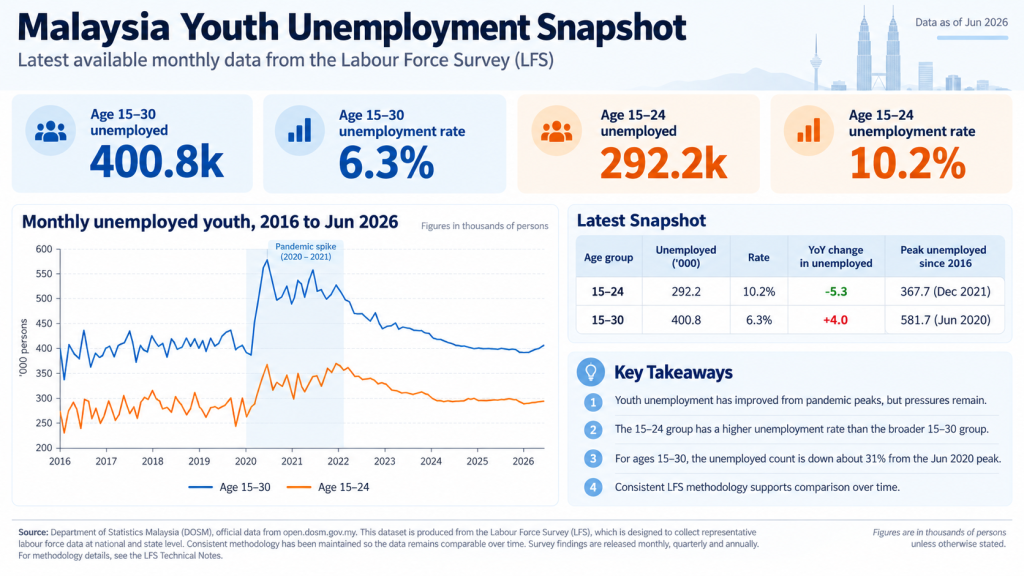
The Department of Statistics Malaysia (DOSM) reported an overall unemployment rate of 2.9% in the first quarter of 2026, the lowest in about a decade. In the same quarter, youth unemployment for those aged 15 to 24 stood at 10.1%.
By May 2026 the youth rate had edged to 10.2%, or 291,600 unemployed young people. Widen the bracket to ages 15 to 30 and the figure reaches 396,000.
Meanwhile employers say they cannot fill roles. In June 2026, more than 1,000 job seekers queued in Melaka for around 500 vacancies at a semiconductor plant offering a reported RM3,500 starting salary. That same month, PERKESO’s MYFutureJobs data showed 3.47 million manufacturing vacancies against 326,407 applicants.
Malaysia does not have a shortage of jobs. It has a mismatch between the jobs on offer and the jobs young people are prepared for and willing to take.
Young applicants cluster in professional, ICT, finance and business roles. The open vacancies are heavily in manufacturing, construction, hospitality and food services. And vacancies paying RM2,500 to RM5,000 draw far stronger interest than those below that band.
| Indicator (Malaysia, 2026) | Figure | Source |
|---|---|---|
| Overall unemployment rate (Q1 2026) | 2.9% | DOSM |
| Youth unemployment, ages 15 to 24 (May 2026) | 10.2% (291,600 people) | DOSM |
| Youth unemployment, ages 15 to 30 (May 2026) | 6.3% (396,000 people) | DOSM |
| Manufacturing vacancies vs applicants | 3.47 million vs 326,407 | PERKESO (MYFutureJobs) |
| Self-employed workers in their early 20s | 128,000 (2013) to 286,000 (2025) | DOSM MyLabourHub |
| Gen Z workplace happiness / burnout | 65% happy / 45% burnt out | Jobstreet by SEEK |
| Global youth unemployment (2025) | 12.4% (67 million people) | ILO |
Economists quoted in the national press call this a “skills and experience paradox”: qualifications on paper that do not line up with what modern industries actually need. That gap is the first thing young people feel, long before they can name it.
What are young Malaysians most worried about?
Ask a room of young Malaysians what keeps them up at night and you will hear four themes, in roughly this order.
1. Staying relevant in an AI-driven world
Artificial intelligence has become the single biggest lens through which young people view their careers.
The worry is not abstract. The International Labour Organisation’s 2026 youth employment report found that 6.1% of youth jobs globally sit in occupations highly exposed to AI, and many of those overlap with the clerical, administrative and sales roles that used to be the first rung of the career ladder.
Across marketing, design, technology, finance and business, young people are asking the same question: which parts of my future job will still need a human?
Here is the shift we are seeing. The conversation is moving from “will AI replace me?” to “how do I become the person who uses AI well?”
Daniel Ho’s advice to the Youth Connect audience was five words long:
Don’t compete with AI. Build with AI
AI can improve productivity, support decisions and automate process. Human judgement, creativity, relationships and strategic thinking are still where value gets created. The future workforce will not be defined by people who compete against technology, but by people who know how to direct it.
Worried about staying relevant? Build a career where the human skills are the job.
Real estate is one of the few careers in Malaysia with no salary ceiling and no degree requirement. IQI gives new negotiators full training, mentorship through IQI Youth, in-house tech, and a 5-day commission payout, backed by a network of 30,000+ professionals across 20+ countries.
Not sure if it is for you? Start with a conversation.
2. Financial security in an expensive country
Career worry and money worry are the same worry from two angles.
With the minimum wage at RM1,700 and entry-level roles under RM2,500 struggling to attract applicants, young people have done the maths. A single salary is not enough to feel secure, so they are thinking about how to:
- Build savings and financial independence early
- Create a second income stream
- Develop skills that generate opportunities on their own
- Reduce dependence on one employer
The definition of success is changing with it. For many, success is no longer a stable job for 30 years. It is flexibility, growth and control over their own future.
Wondering how far an income built on performance can go? See how much property agents really earn in Malaysia.
3. Careers that no longer follow a straight line
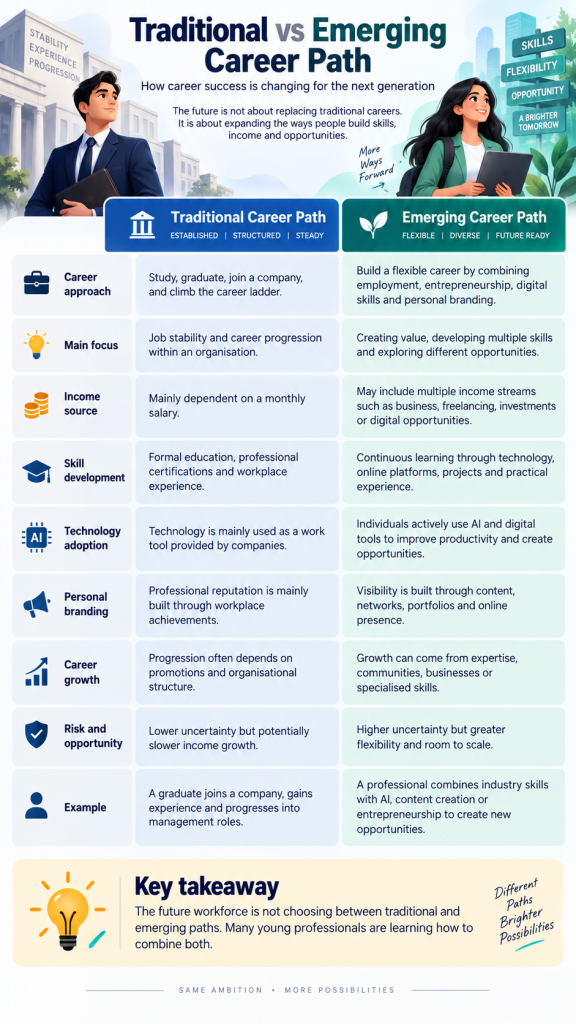
The traditional path was simple: education, employment, promotion.
Today’s data tells a different story. DOSM figures show the number of self-employed Malaysians in their early 20s has more than doubled since 2013, from 128,000 to 286,000. The 20 to 24 age group alone grew 123% over that period, and two in three own-account workers are now urban.
Freelancing, content creation, digital businesses and e-hailing are no longer side hustles. For a growing share of young people they are the main plan.
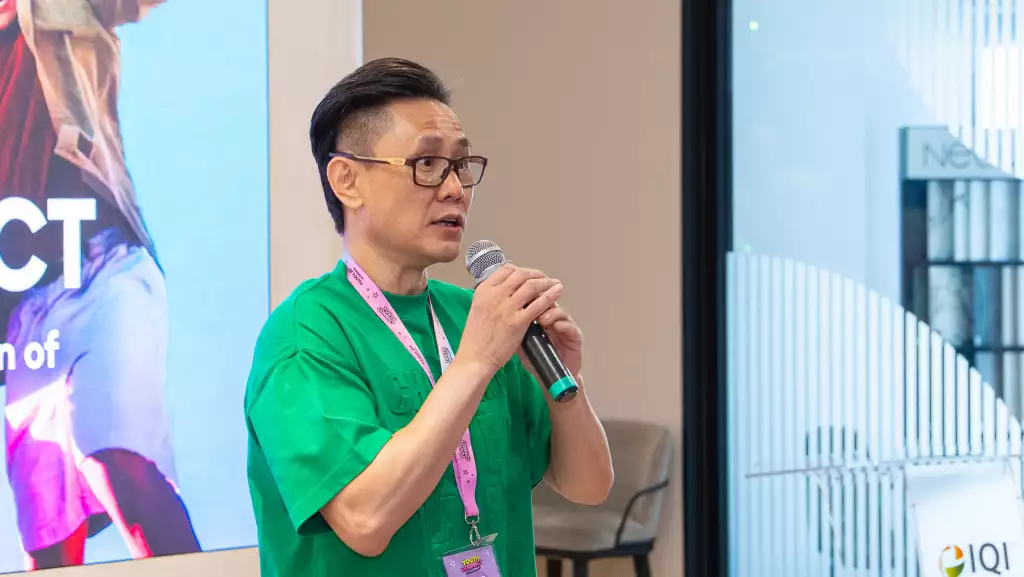
The old promise has quietly expired, and young people know it. As Daniel Ho told the Youth Connect audience:
The old game, study hard, get a good degree, then you come out your life is guaranteed. Is it guaranteed now? No, unfortunately.
Daniel Ho, Co-Founder and Group Managing Director, IQI
Qualifications still matter. They are just no longer sufficient on their own. The future workforce will need qualifications plus adaptability, continuous learning and the ability to create value beyond a job description.
That brings its own anxiety. Economists warn that prolonged reliance on gig work without EPF, PERKESO coverage or a career ladder can widen income inequality over time. Young people know this too. They are not rejecting stable work. They want stable work that also lets them grow.
| Factor | Traditional career path | Emerging career path |
|---|---|---|
| Definition of success | Job security, tenure, title | Growth, flexibility, ownership |
| Income model | One salary, annual increment | Multiple streams, performance-linked |
| Skills | Qualification-led, fixed | Continuous learning, AI-augmented |
| Loyalty | Unconditional, long tenure | Earned, mutual, conditional on growth |
| Biggest risk | Redundancy, stagnation | Income volatility, no safety net |
4. Burnout before the career has even started
This one surprises employers most.
Jobstreet by SEEK’s Workplace Happiness Index found Gen Z workers in Malaysia (ages 18 to 29) recorded the lowest workplace happiness at 65%, against 71% for Millennials and 72% for Gen X. They also reported the highest burnout, with 45% saying they feel exhausted at work.
Only 69% of Gen Z respondents felt able to be their authentic selves at work, compared to 75% of older colleagues.
The Malaysian Employers Federation notes that many young employees now change jobs within 18 months. Critics call it disloyalty. Young people themselves describe it differently: they are still exploring, and they will stay where they can see a path to grow. Loyalty has not disappeared. It has become conditional.
Which human skills will matter more as AI advances?
If AI takes the repetitive work, what is left is the work that needs a person in the room. Five skills keep coming up.
Emotional intelligence
Reading people, building trust and responding well to pressure. In sales, service, healthcare and leadership, this remains the job.
Communication
Explaining an idea clearly, connecting with someone across a table, and building a relationship that outlasts a transaction. AI can draft the message. It cannot earn the trust.
Creativity
AI generates options. Human experience, taste and perspective decide which option matters and why. Originality still comes from lived experience, not from a prompt.
Leadership
Inspiring people, guiding teams and helping others grow requires empathy and judgement earned in the real world.
Authenticity
Personal stories and individual perspectives are the one thing that cannot be copied at scale. In a world of generated content, being recognisably yourself becomes an asset.
Technology extends human capability. It does not replace the human at the centre of a career built on relationships.
Why do so many capable young people freeze instead of act?
Ambition is rarely the problem. Uncertainty is.
Many young people hesitate because they are waiting for the perfect opportunity, the perfect plan or the perfect timing. None of those arrive on schedule.
Progress comes from small experiments, not perfect plans. The steps that create momentum are modest:
- Learn one AI tool properly and use it every day for a month
- Start building a personal brand, even with an audience of ten
- Launch a small project with a real deadline
- Spend a day inside an industry you have never considered
- Ask someone ten years ahead of you for 30 minutes of their time
The ability to keep learning and adapting may end up being the single biggest advantage in the future workplace. It is also the one advantage no one can be locked out of.
Is AI creating opportunities, not just taking them?
Technology is not only changing existing jobs. It is creating new ones, and lowering the cost of starting something.
A decade ago, launching a business meant capital, staff and an office. Today a young Malaysian with a laptop can research a market, build a brand, produce content, automate admin and reach customers in an afternoon, with AI doing much of the heavy lifting.
The future opens up a lot of opportunity for young Malaysians that look into entrepreneurship that is powered by AI.
Daniel Ho, Co-Founder and Group Managing Director, IQI
AI-powered entrepreneurship is where personal brand, skills and technology meet. It is also a direct answer to the financial-security worry: a second income stream that scales with effort, not with headcount.
The self-employment data above shows young Malaysians are already moving this way. The question is whether they do it with a safety net, real skills and a mentor, or on their own.
How can organisations support the next generation?
Preparing the future workforce is not only the responsibility of young people. Companies, leaders and experienced professionals set the conditions.
The data points to four things that move the needle.
Learning opportunities
Real exposure to new tools, industries and skills, not a slide deck once a year. Malaysia’s skills mismatch is a training gap as much as an education gap.
Mentorship
Young people consistently rank mentorship and clear career paths alongside salary. A mentor turns an abstract worry about the future into a concrete next step.
Growth environments
Room to experiment, contribute and occasionally fail. Given the burnout data, this also means realistic workloads and managers who notice.
Future-ready structures
Career ladders that reward learning and digital adoption, and income models that scale with performance rather than tenure alone. Young people will stay where they can see themselves growing. Build that, and the loyalty question answers itself.
Case study: how IQI is putting this into practice
At IQI, we believe empowering people means creating the conditions for them to learn, grow and discover what they are capable of. In 2026 that belief took a more structured form.
IQI Youth: a platform, not a programme
In May 2026, at the Juwai IQI International Convention in Kuala Lumpur, the group formally launched IQI Youth, a platform for developing the next generation of real estate professionals around four pillars: growth, learning, influence and leadership development.
The logic is simple. Real estate is one of the few careers in Malaysia where income scales with performance rather than with years served, where the entry barrier is training and licensing rather than a specific degree, and where the daily work is built on exactly the human skills AI cannot replace: trust, communication and judgement.
That makes it a natural laboratory for the future workforce, and it puts a responsibility on the industry to give young people structure, mentorship and tools rather than just a tag and a target.
IQI Youth Connect: closing the gap between knowing and doing
On 22 August 2026, IQI Youth Connect brought around 100 young Malaysians aged 18 to 35 to IQI’s headquarters in Kuala Lumpur for a full day on three topics they had told us mattered most: AI, content marketing and entrepreneurship.
The format reflected what young people say they want from employers. Live demonstrations rather than lectures. Practical frameworks they could use the following week. Direct access to founders, marketers and creators who had built something themselves. And a networking layer, because the second most common worry after “am I relevant?” is “who do I even ask?”
Participation was open to students, fresh graduates, working adults, freelancers and career changers, with no connection to IQI required. The point was not to recruit a room. It was to equip one.
What we learned in that room is what shaped this article: young Malaysians are not waiting to be rescued from the future. They are asking who will help them prepare for it.
Read the full IQI Youth Connect 2026 highlights, or explore the IQI Youth platform.
The future belongs to those who prepare for it
The world of work is changing faster than any single generation has experienced before. Young Malaysians are not asking for it to slow down.
They are asking for exposure, structure and someone willing to show them the way.
Young people are not waiting for the future. They are preparing for it. The organisations that prepare alongside them will be the ones that still have a workforce in ten years.
Frequently asked questions
Young Malaysians are mainly concerned about staying relevant as AI changes work, building financial security on a single salary, career paths that no longer follow a straight line, and early burnout. DOSM data shows youth unemployment at 10.2% even as overall unemployment sits near 3%.
Because of a mismatch, not a shortage. PERKESO recorded 3.47 million manufacturing vacancies against 326,407 applicants. Young job seekers cluster in professional, ICT and finance roles, while open vacancies are concentrated in manufacturing, construction and hospitality, often at pay below the RM2,500 to RM5,000 band that attracts applicants.
AI will automate certain tasks, and the ILO estimates 6.1% of youth jobs globally are highly exposed to it. Human skills such as creativity, communication, judgement and relationship building remain valuable, and workers who learn to use AI well are likely to be more in demand, not less.
A combination of AI and digital fluency, adaptability, communication, creativity, emotional intelligence and leadership. The ability to keep learning is the skill that underpins all of them.
Through mentorship, real learning opportunities, exposure to technology, realistic workloads and career paths that reward growth. Research consistently shows young Malaysians stay with employers where they can see themselves developing.
IQI Youth is a platform launched by Juwai IQI in 2026 to develop the next generation of real estate professionals around four pillars: growth, learning, influence and leadership. IQI Youth Connect is its flagship learning and networking event, focused on AI, marketing and entrepreneurship for Malaysians aged 18 to 35.
*source from iqiglobal.com/blog/





Join The Discussion